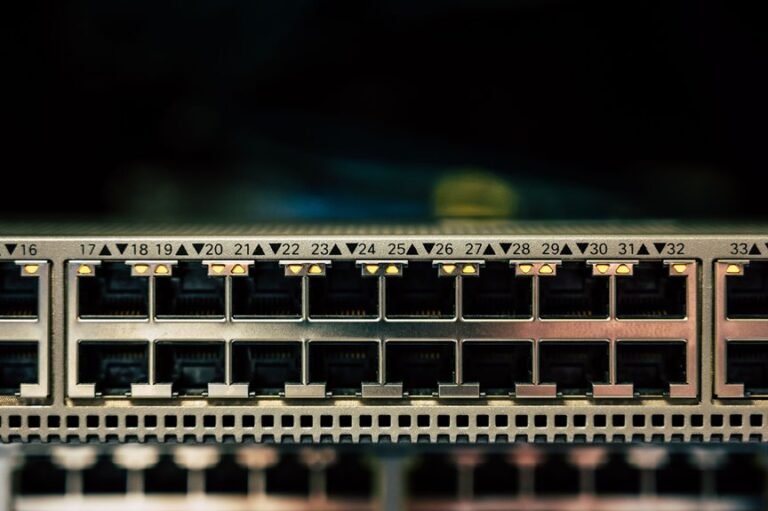
0.27.1 Private Network Configuration Guide
The 0.27.1 Private Network Configuration Guide presents a deterministic approach to building isolated networks. It outlines prerequisites, core components, and repeatable procedures to ensure readiness and interoperability. Security, governance, threat modeling, and defense-in-depth are emphasized, along with auditing, failover planning, and latency considerations. The document promotes verifiable deployment and reproducible test cases for disciplined fault isolation. It situates practical benchmarks and documented baselines, inviting practitioners to verify alignment with existing constraints before proceeding.
How to Set Up a Private Network in 0.27.1
To set up a private network in version 0.27.1, users should begin by ensuring that the system prerequisites are met and that the appropriate software components are installed.
The process emphasizes private network readiness and configuration basics, detailing deterministic steps for secure topology, address allocation, and verification.
Structured procedures promote freedom through transparent, auditable setup and reproducible, minimal-risk deployment.
Core Components and Configuration Basics
Core Components and Configuration Basics introduces the fundamental building blocks and baseline settings required for a private network. The discussion centers on essential elements, interoperability, and disciplined configuration practices. It defines core components, connectivity primitives, addressing schemas, and baseline performance parameters. The tone remains precise and detached, emphasizing clarity for freedom-seeking administrators. Clear defaults and repeatable procedures align with private network goals and reliable deployment.
Security and Reliability Best Practices for 0.27.1
How can risk be quantified and mitigated within the 0.27.1 release cycle? The article presents structured, technical guidance on security and reliability, emphasizing governance, threat modeling, and defense-in-depth. It highlights privacy safeguards as core controls and latency optimization as a performance constraint. Concrete metrics, auditing, and failover planning are described to sustain resilient, freedom-oriented private networks.
Troubleshooting Common 0.27.1 Private Network Issues
Diagnostics for 0.27.1 private networks require a disciplined, repeatable approach to identify, reproduce, and remediate issues affecting connectivity, privacy safeguards, and performance.
The section delineates structured fault isolation steps, verifying network isolation boundaries, auditing peer authorization mechanisms, and assessing certificate validity.
It emphasizes reproducible test cases, logs, and baseline comparisons to minimize ambiguity, enabling deterministic remediation and secure, freedom-oriented network operation.
Frequently Asked Questions
How Does 0.27.1 Handle Multi-Region Private Networks?
0.27.1 handles multi-region private networks with a defined multi region topology and built-in cross region failover, enabling resilient connectivity. The approach emphasizes deterministic routing, cross-region replication, and automated failover safeguards to maintain uninterrupted service across regions.
Can Private Networks Scale Beyond 1000 Nodes in 0.27.1?
Private networks can scale beyond 1000 nodes, subject to scaling considerations and network topology. The system requires careful planning of bandwidth, multicast routing, and control plane distribution to maintain performance, reliability, and freedom without compromising security or manageability.
What Licensing Applies to Private Network Features in 0.27.1?
Licensing terms govern private network features in 0.27.1, with defined usage rights and term durations. Feature restrictions specify permissible deployments and node counts. The audience seeking freedom should note compliance obligations, renewal triggers, and audit provisions within the license.
How to Migrate Existing Networks to 0.27.1 Private Mode?
Migration strategies for migrating existing networks to 0.27.1 private mode prioritize controlled cutover, compatibility testing, and phased rollout; security considerations focus on access controls. Unrelated to multi region, scaling, licensing, or hybrid cloud requirements. Freedom-oriented, precise, structured.
Does 0.27.1 Support Hybrid Cloud Private Networking?
Hybrid orchestration is supported in 0.27.1 for private networks, enabling mixed environments with on-prem and cloud resources. The architecture emphasizes firewall benchmarking, scalable policy enforcement, and precise connectivity controls suitable for freedom-seeking operators.
Conclusion
In the 0.27.1 private network configuration framework, deployment is deterministic, verifiable, and reproducible, with explicit prerequisites, core components, and governance. The emphasis on threat modeling, defense-in-depth, and auditable procedures ensures readiness and reliability across topology, addressing schemas, and failover planning. By adhering to verifiable deployment and disciplined fault isolation, operators achieve secure operation and measurable performance. As the adage goes, “measure twice, cut once,” reinforcing the value of careful validation before live deployment.