168.1.26 Router Login and Network Management Guide
The 168.1.26 Router Login and Network Management Guide presents a structured path from access to ongoing governance. It details initial access points, credential handling, and quick checks of core settings. The document then maps the admin dashboard, core configurations, and essential controls. It also addresses performance, security profiles, and device monitoring. A comprehensive view is promised, with policy controls and troubleshooting steps that reveal gaps and dependencies worth examining further.
How to Log In to the 168.1.26 Router: Access, Credentials, and Initial Quick Checks
The router at 168.1.26 can be accessed via a standard web browser by entering http://168.1.26 or http://192.168.1.26 in the address bar.
The procedure records login credentials, performs initial checks, and redirects to the admin dashboard.
Users verify core settings, assess network performance, and review security features before proceeding with configuration changes.
Navigating the Admin Dashboard: Layout, Core Settings, and Key Controls
Access to the admin dashboard presents an organized entry point for configuration. The layout separates status, controls, and diagnostics, enabling rapid orientation. Core settings govern WAN/LAN parameters, routing, and security profiles. Key controls include session, backup, and firmware options.
Network topology visibility informs device placement and topology-aware rules, while device prioritization settings allocate bandwidth and policy enforcement with deterministic behavior.
Optimize Network Performance and Security: Wireless, Firmware, Parental Controls, and Guest Networks
Optimizing network performance and security involves a systematic approach to wireless configuration, firmware management, parental controls, and guest network design.
The detached evaluation outlines precise settings, schedules, and validation steps for reliable operation.
It remains concise and technical, emphasizing interoperability and freedom of choice.
Careful terminology avoids unrelated topic, off topic discussion, ensuring focused guidance without extraneous, redundant or speculative commentary.
Monitor and Manage Connected Devices: Usage, Access Rules, and Troubleshooting Common Issues
Effective monitoring and control of network clients follows from the practices outlined for performance and security, applying them to the live device set.
The section details usage metrics, access rules, and fault isolation.
It defines device enumeration, traffic quotas, and rule-based permissions, with actionable steps for troubleshooting connectivity, auth failures, and inconsistent reports.
unrelated topic and example idea illustrate implementation considerations.
Frequently Asked Questions
How Can I Reset the Router to Factory Defaults?
A factory reset is performed by pressing and holding the reset button for ten seconds, then releasing; this action initiates a factory reset, restoring defaults, including vpn passthrough and remote management settings to original state.
Does the Router Support VPN Pass-Through and Setup?
The router supports VPN pass through and VPN setup; remote management security is configurable. Follow the factory reset procedure for baseline, monitor LED status indicators, and recognize fault condition signals while maintaining secure remote access during configuration.
How Do I Enable Remote Management Securely?
Like a compass steadying in wind, the router can be secured: enable remote management only over HTTPS with a strong password, enable firewall, enforce MFA, and restrict access by IP, port, and VPN-tunneled sessions.
Can I Backup and Restore Router Configuration?
Yes, a backup configuration can be saved and later restored as needed. The process involves exporting then importing; ensure firmware update is current, and parental controls settings are included. Verify integrity after restore settings to confirm operational stability.
What LEDS Indicate Status and Fault Conditions?
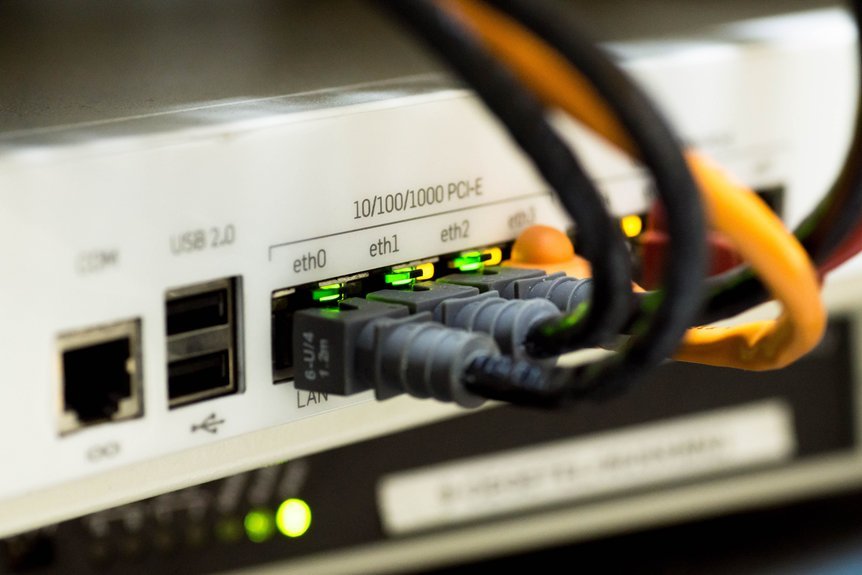
LED indicators reveal Network status through color and blink patterns; Fault alerts appear as specific LED codes. Button markings correspond to reset or diagnostic modes. Clear interpretation requires reference to device documentation for exact LED behavior.
Conclusion
This guide consolidates essential procedures for accessing and managing the 168.1.26 router, covering login, dashboard navigation, core settings, and performance optimization. It emphasizes secure access, audit-trail logging, and proactive monitoring, with structured steps for WAN/LAN configuration, firmware management, and policy controls. By categorizing features into login, controls, and diagnostics, administrators gain clear workflows. The conclusion lands like a well-calibrated instrument, a compass in a data-driven landscape, guiding steady, informed decisions through precise, repeatable routines.