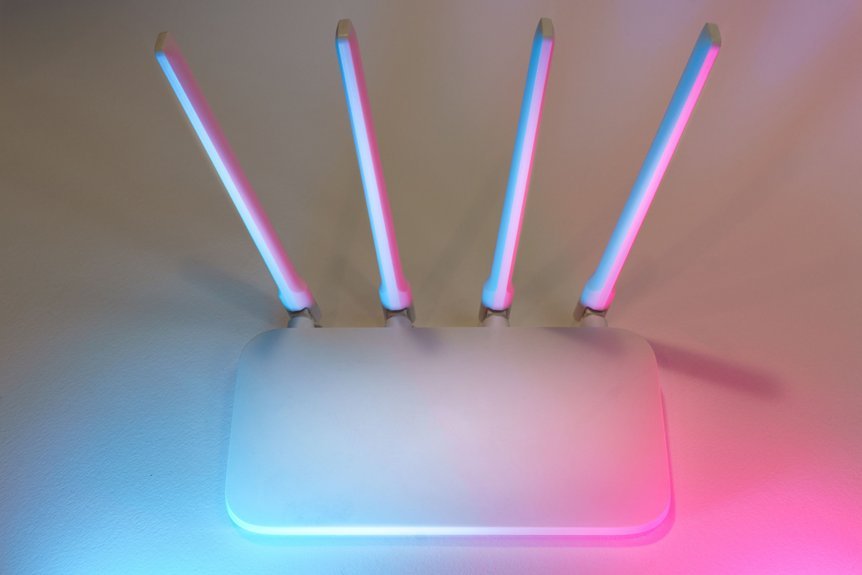
192168.1.100 Router Configuration and WiFi Setup Guide
Access to the 192.168.1.100 admin panel is the initial prerequisite, with a device connected to the router network and a visit to http://192.168.1.100 to verify firmware status and log changes. The guide emphasizes secure network basics—sturdy WPA2/WPA3, unique SSID, strong credentials—while disabling legacy protocols and enabling client isolation. Performance guidance covers channel selection, band balancing, and the use of mesh or extenders, all underpinned by auditable, scalable deployment practices that raise a critical question: what gaps remain that could compromise future resilience?
How to Access the 192168.1.100 Admin Panel
To access the 192168.1.100 admin panel, users must connect a device to the router’s network and navigate to http://192.168.1.100 in a web browser.
The interface presents standardized access protocols, authentication prompts, and control modules.
Administrators audit firmware updates status, apply verifications, and log events, ensuring resilient performance while preserving freedom to customize settings within permitted administrative scope.
Secure Your Network: SSID, Password, and WPA2/WPA3 Settings
Securing wireless access begins with configuring the SSID, authentication credentials, and encryption settings on the 192168.1.100 router.
The guide emphasizes security basics, selecting a unique SSID, and enabling strong WPA2/WPA3, paired with robust passphrases.
It reinforces device authentication, suspending legacy protocols, and enforcing client isolation to preserve freedom while minimizing attack surface and unauthorized access.
Optimize WiFi Performance: Channel, Band, and Mesh or Extender Tips
Optimizing WiFi performance concentrates on channel selection, band utilization, and the deployment of mesh or extenders to maximize coverage with minimal interference.
This review targets deliberate channel, 2.4/5 GHz banding, and topology-aware placement to preserve throughput.
Network topology insights guide interference avoidance, while bandwidth optimization focuses on load balancing, airtime fairness, and persistent aggregation across access points for robust, scalable freedom.
Quick Troubleshooting and Common Pitfalls for 192168.1.100
Common failure modes for 192.168.1.100 setups are cataloged to prompt rapid isolation: misconfigured IP schemes, incorrect DHCP scopes, and duplicate MAC addresses cause address conflicts and intermittent connectivity.
In this scope, troubleshooting emphasizes network security, firmware updates, and network segmentation, with precise diagnostics, minimal downtime, and repeatable remediation for stable provisioning, secure access, and auditable change control.
Frequently Asked Questions
Can I Change the Router’s Default LAN IP Address?
The question: yes, one can change LAN IP. In practice, adjust router admin interface, set a new LAN address, apply; note implications for network topology and connected devices, perform a firmware update if features or safeguards require it, and verify connectivity.
How Do I Update the Router Firmware Manually?
Firmware manual: to manually update, verify device compatibility, obtain official image, and follow updating steps precisely. It requires downtime and preserves settings; monitor progress to safeguard network security while minimizing exposure. Release notes clarify changes and risks.
Is There a Guest Network Feature on This Model?
Yes, it supports a guest network. The configuration leverages isolated VLANs and firewall settings to segregate guest traffic, enforce bandwidth controls, and prevent access to the admin interface or LAN resources.
Can I Disable WPS and Why Would I?
Disabling WPS is advised to mitigate security risks; it reduces brute-force and rogue-device exploits. The device can disable WPS via admin UI, though this may impact convenient one-button device pairing, requiring manual WPA2/WPA3 setup for continued connectivity.
How Do I Reset to Factory Defaults Without Losing Configs?
To reset to factory defaults without losing configs, use a controlled reset: note Reset methodology, Factory reset options, Wireless security best practices, Firmware update steps. The process preserves selected settings while reinitializing firmware and access credentials.
Conclusion
In the dim glow of the admin panel, the router’s logs whisper of progress and unseen risks. The audit is complete, firmware current, changes tracked, and security hardened with unique SSID, robust WPA2/WPA3 credentials, and disabled legacy protocols. Yet a final challenge remains—airtime fairness, optimal channels, and strategic mesh placement still unresolved. As the page closes, a subtle ping hints at imminent performance gains, and the network steadies, awaiting the next authorized optimization. The lock tightens, and readiness lingers.