11.12.18 Private Network Configuration Guide
The 11.12.18 Private Network Configuration Guide presents a disciplined approach to isolated, secure communications. It outlines adaptable topologies, layered perimeters, and policy-driven access controls. Identity, device posture, and segmentation are emphasized to limit lateral movement. Governance, auditable processes, and scalable modular designs support reliable growth while maintaining compliance. The guide invites careful consideration of tradeoffs and implementation details, leaving unresolved implications that warrant further investigation before proceeding.
What Is a Private Network and Why It Matters
A private network is an isolated communications backbone that enables authorized devices to exchange data without relying on public infrastructure. It emphasizes controlled accessibility, predictable performance, and resilience through network isolation. Provisioning security governs onboarding and identity verification, while access controls enforce policy-driven usage. This framework supports reliable operations, data confidentiality, and freedom to innovate without exposure to external threats or unsolicited traffic.
Design the Right Topology for Your Needs
Design a topology that aligns with operational requirements, security posture, and growth projections. The configuration should balance scaling reliability and cost optimization while preserving modularity. Assess centralized versus distributed patterns, latency, and failover capabilities. Document interfaces, data flows, and access points. Favor adaptable segments, clear boundaries, and measurable SLAs. Choose a model supporting evolving workloads, governance, and predictable expansion.
Harden Your Perimeter With Firewalls, VPNS, and Access Rules
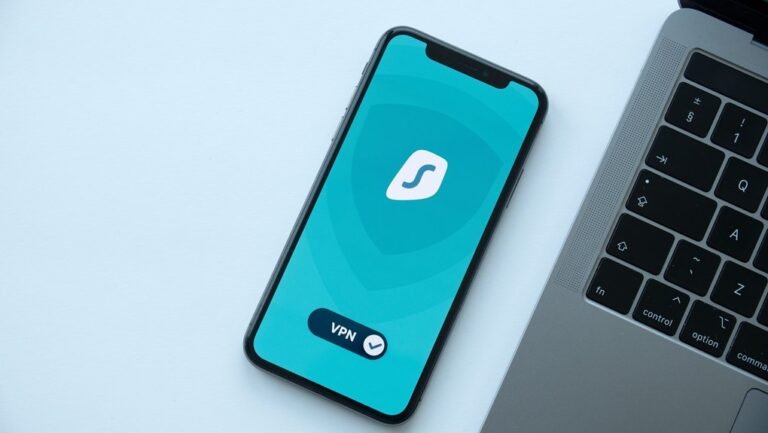
Effective perimeter hardening relies on a layered setup of firewalls, VPN controls, and explicit access rules to enforce boundary security, traffic segmentation, and authorized pathways between networks. The approach emphasizes disciplined firewall policy management and consistent vpn tunneling practices, ensuring minimal exposure while preserving agile connectivity.
Implementations should align with risk thresholds, audit trails, and scalable segmentation, enabling controlled external access without compromising freedom.
Manage Identities, Devices, and Segmentation for Security
Managing identities, devices, and segmentation for security requires a disciplined approach to authenticate access, enforce device posture, and constrain lateral movement.
The discussion addresses identity governance frameworks, device provisioning workflows, and network segmentation strategies.
It emphasizes security policy synthesis, governance alignment, scalable authentication, continuous posture evaluation, and auditable controls, enabling freedom to innovate while maintaining robust, defendable private-network operations.
Frequently Asked Questions
How to Budget for Private Network Deployment and Ongoing Costs?
Budget planning estimates upfront capital plus ongoing OPEX, incorporating cost forecasting models. It assesses migration risks, defines restoration planning, and buffers for contingencies, ensuring scalable private network deployment while preserving financial freedom through disciplined expenditure control and periodic reviews.
What Are Common Pitfalls in Private Network Migrations?
Common pitfalls in private network migrations include underestimating data locality constraints and overlooking low latency design implications, which hamper performance. A disciplined approach emphasizes precise topology, robust monitoring, synchronized cutovers, and thorough validation to preserve service freedom and reliability.
How to Measure Private Network Performance and SLAS?
A digital loom weaves metrics; Private latency, SLA benchmarks, Security posture, Data sovereignty are measured via end-to-end latency, uptime, jitter, throughput, and policy compliance. The measure informs governance, performance baselines, and freedom-minded risk decisions.
Which Compliance Standards Apply to Private Networks?
Compliance standards applicable to private networks include ISO/IEC 27001, NIST SP 800-53, PCI DSS (for payment-relevant data), HIPAA (for healthcare data), and GDPR considerations. Private networks require alignment with sector-specific and cross-border regulatory frameworks.
How to Restore Private Network Services After a Breach?
Immediate concern: restoration after a breach relies on defined playbooks and containment actions. The approach emphasizes restoration testing and breach containment, including validated backups, forensics, access revocation, and rapid service reinitialization to minimize downtime and risk.
Conclusion
A disciplined private network configuration aligns topology, perimeter controls, and identity-driven posture to restrict unauthorized access while enabling legitimate data exchange. By selecting adaptable architectures, enforcing layered perimeters, and applying policy-driven access, organizations achieve scalable, auditable security. A hypothetical healthcare case illustrates benefits: a hospital safely connects clinicians’ devices to an on-premix patient data system over an encrypted VPN, with device posture checks and segmented networks preventing lateral movement during routine remote rounds. This disciplined approach supports compliant, reliable private communication.